
The Growth Case for Marketing: Creativity, Consistency, and Measured Impact
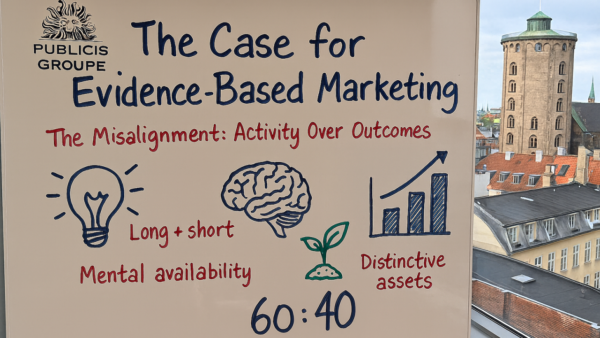
To often you hear the marketing spiel : “We’ll build brand love, drive loyalty, and win hearts.”
But in the real world of boardrooms, budgets, and P&Ls, love is rarely enough. What separates effective marketing from feel-good campaigns is measurable impact – growth in penetration, profit, mental availability, and consistency over time.
Below I share my POV and explore why marketers must move from activity-based metrics to true business impact — drawing on the latest evidence from System1 , WARC and Ehrenberg-Bass Institute and outline how to build a practical, measurable system for marketing effectiveness. Hope you find it insightful! 😀
Here goes:
1) The Misalignment: Activity Over Outcomes
In 2025 many marketing teams still to often focus on what is easiest to measure: impressions, clicks, engagement rates etc. These metrics are tempting because they’re precise, often near-real time, and feel like levers to pull.
But the danger is that you end up optimizing what you can measure, rather than what drives business performance. You allocate spend to the latest channel with “good metrics,” even if it underperforms in real contribution. You prioritize performance tactics over brand work because brand metrics feel longer, fuzzier, riskier.
In short: you lose sight of impact—incremental profit, market share gain, penetration growth, price resilience. When marketing is reduced to a cost center, you starve the very levers that scale returns over time.
2) What the Evidence Demands
Too often, this disconnect between activity and impact isn’t due to a lack of effort — it’s a lack of evidence. Marketers aren’t short on data; they’re drowning in the wrong kind. Dashboards glow with metrics that feel precise but say little about growth. What we need is clarity on what truly drives effectiveness, backed by research that separates signal from noise.That’s where the growing body of evidence from System1, WARC, and Ehrenberg-Bass helps.
Together, they point to a consistent truth: creativity, consistency, and mental availability—not clicks or impressions—are the real multipliers of marketing performance. Here’s what the leading research tells us:
2.1 Creativity as a Profit Multiplier
The Creative Dividend (System1 + Effie) demonstrates that high-quality creative, particularly emotional, delivers outsized business effects. System1 analyzed over 1,250 campaigns across the US and Europe (with data from >200,000 consumers) to show that creativity is not a cost but an investment..
Their findings show that well-branded, emotionally engaging ads outperform low-emotion ones—even in short horizons. (System1 calls emotional campaigns a source of “safe payback.”)
Follow-up analysis of the study reinforces that it’s not emotion alone that drives results — it’s the combination of strong emotional response and clear branding (distinctive assets). When creativity is both emotionally engaging and easily attributed to the brand, the commercial effect multiplies.
2.2 Long / Short (Brand + Performance) Balance Matters
Creativity may be the spark, but consistency and balance are what sustain effectiveness over time. WARC and leading effectiveness practitioners emphasize that brand building doesn’t compete with activation — it enables it. A strong brand foundation amplifies every short-term performance effort, creating what professor Mark Ritson calls “the ultimate strategic BOGOF” — because long-term investment pays back twice, strengthening both brand equity and short-term response.
The much-cited 60/40 rule isn’t a rigid formula, but a useful starting point for planning. The evidence is clear: brands that invest roughly 60% in long-term brand building and 40% in short-term activation outperform those skewed heavily toward performance. You simply can’t build a healthy brand on activation alone — short-term tactics may drive spikes, but they rarely compound.
And just as important as balance is creative consistency. WARC’s longitudinal analyses show that brands maintaining consistent creative platforms and visual codes build stronger equity and require less spend over time to achieve the same effect. Frequent resets, new taglines, or changing brand personalities might feel refreshing internally — but to consumers, they dilute memory structures and reduce return on investment. And that leads nicely into distinctive assets, read on below 😃!
2.3 Distinctive Assets: The Foundation of Brand Recognition
While creativity and balance drive effectiveness, the building blocks of lasting marketing impact are distinctive brand assets — the visual and verbal cues that make a brand instantly recognizable.
Research from the Ehrenberg-Bass Institute shows that most brands overestimate how distinctive their assets really are. In many categories, only a handful of elements — a color, a logo, a tagline, or a character — are both famous and uniquely attributed to the brand. Yet these seemingly simple cues are what make marketing efficient: they reduce cognitive effort for consumers, build memory structures, and allow campaigns to work harder with less media spend.

Distinctiveness is often misunderstood as differentiation. The goal isn’t to be radically different — it’s to be recognizably you. As Byron Sharp puts it, brands should “look like they belong in the category, but be easy to tell apart.” Distinctive assets create that shortcut in the mind: they trigger recognition, reinforce trust, and keep the brand top-of-mind even when the consumer isn’t consciously thinking about it.
For marketers, this means measuring and protecting these assets over time. Consistency is not a constraint; it’s a growth strategy. Rebranding too frequently, or fragmenting visual identity across touchpoints, erodes mental availability and forces brands to spend more to rebuild what they already owned.
3) Mental Availability, Attention, and Consumer Indifference
Ehrenberg-Bass and Byron Sharp’s broader point is simple but uncomfortable: consumers are largely indifferent to brands. People don’t think about brands very often, and they rarely feel deep loyalty. That’s why marketing exists — not to make consumers love us, but to ensure they remember us when it matters.
At a recent Publicis Client Academy in Stockholm, this insight came alive in discussions about real-world marketing behavior. Across industries, we saw the same pattern: brands chasing emotional “love marks” or purpose-driven storytelling, while neglecting the basic job of building memory and salience.
Sharp’s argument reframes what effective marketing should do:
- Build mental availability — ensure the brand is easily recalled in buying situations.
- Maintain physical availability — make it easy to buy through distribution, placement, and accessibility.
- Focus on attention and entertainment — because if people don’t notice your ads, nothing else matters.
- Avoid over-investing in “purpose” narratives that few consumers connect to actual purchase decisions.
As Byron Sharp’s evidence reminds us, most consumers are simply not that invested. They don’t wake up thinking about brands, and they don’t form deep emotional bonds with them. Which brings us back to where we started: too often, we promise to “build brand love, drive loyalty, and win hearts.”
But in the real world of boardrooms, budgets, and P&Ls — love is rarely enough. The real challenge isn’t affection; it’s attention. Great advertising gets noticed, connects clearly to the brand, and lodges in memory. Purpose, tone, and meaning can all support that — but they can’t replace it.
For modern marketers, the implication is clear: effectiveness depends on mental availability — ensuring your brand comes to mind quickly and effortlessly in buying situations. To achieve that, we must measure what reflects how people actually think and buy, not what flatters our dashboards. Track memory recall, brand fluency, salience, and distinctive asset strength — the true indicators of mental availability — not just engagement or “brand love.”
Because if consumers are largely indifferent, as Byron Sharp reminds us, attention is the scarce currency. And if your brand isn’t noticed, remembered, and thought of at the moment of choice, it might as well be invisible.
4) Building a Measurement System Anchored in Impact
If creativity and consistency are what drive effectiveness, then measurement is what keeps it honest. Yet too often, marketing measurement still rewards activity as mentioned earlier, not impact.
An evidence-based system should do three things well:
- Diagnose quality before spend. Measure creative effectiveness early — not only by how it performs in market, but by its emotional strength, clarity, and brand linkage. Creative quality is the single biggest multiplier of profit, and it should be treated as such.
- Track distinctiveness over time. Audit your brand’s assets — colour, logo, sound, tone — not to refresh them constantly, but to ensure they remain recognizable and consistently used. The goal is to strengthen memory structures, not redesign them.
- Balance mental and physical availability. Evidence shows growth depends on both: Build mental availability by ensuring your brand is easily recalled in buying situations. + maintain physical availability by making your product simple to find and buy — through distribution, placement, and accessibility.
- Link marketing to commercial outcomes. Move beyond campaign metrics toward business effects: profit, penetration, price resilience. Map short-term and long-term performance so every initiative builds cumulative value, not isolated results.
The best measurement systems are not dashboards; they’re learning systems. They help marketers see what works, prove value to the business, and continuously improve creative and brand performance. In short: measure less, but measure what matters.
Conclusion
In a world of fragmented channels, rising ROI pressure, and constant noise, marketers can’t afford to steer by gut or vanity metrics. The case for evidence-based marketing is straightforward: creativity backed by data outperforms, consistency compounds, and memory matters more than love.
The tension is real — stakeholders want instant proof, while effectiveness takes patience and structure. But when you measure impact rather than activity, you align creative ambition with business outcomes.
Because at the moment of choice, if consumers don’t remember your brand, even the most emotional story or purpose-driven message disappears. So focus on availability. Strengthen your assets. Test with rigor. And let evidence — not opinion — guide your marketing. 🤩

